Qdrant is the best default for most production RAG, Pinecone is the pick for fully managed zero-ops scale, and Weaviate is the pick when native hybrid and multimodal search sit at the center of the product.
Qdrant wins overall for production RAG, with the fastest filtered search, flat resource-based pricing, and the cheapest self-hosting.
Pinecone wins for zero-ops managed scale and enterprise SLAs, offering the simplest path from prototype to production with nothing to run.
Weaviate wins for native hybrid search and multimodal data, fusing keyword and vector matching in one query with built-in vectorizers.
Qdrant and Weaviate are open source and self-hostable; Pinecone has no open-source build, though its BYOC option can run it inside your own cloud for data residency.
What Each Tool Does
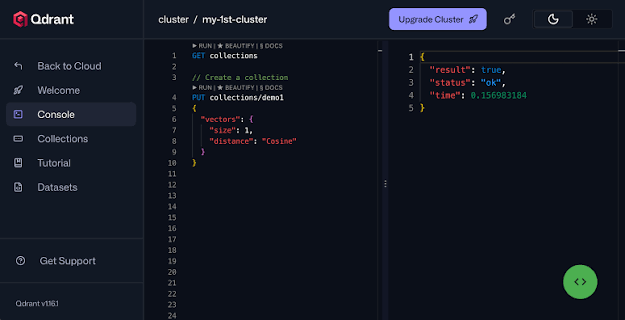
Qdrant is an open-source vector database written in Rust and licensed under Apache 2.0, built for high-throughput search with strong metadata handling. Its payload-aware filtering applies conditions during the HNSW graph walk rather than after retrieval, so filtered queries stay close to unfiltered speed even on complex predicates. You can run it as a single binary on your own hardware, use the managed Qdrant Cloud, or run Hybrid Cloud, where Qdrant operates a cluster inside your own infrastructure.
Pinecone is a fully managed, serverless vector database with a proprietary cloud and no open-source build to run yourself. It operates the index, storage, API, and scaling for you, with no nodes to size and no HNSW parameters to tune, which makes it the fastest route from prototype to production. Namespaces give each tenant an isolated slice of an index, and a BYOC option can run Pinecone inside your own cloud account when data-residency rules require it.
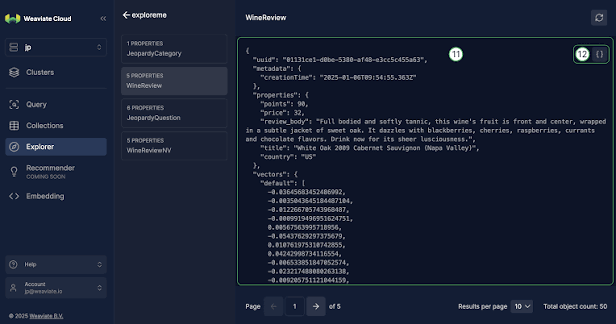
Weaviate is an open-source vector database under a BSD-3 license, with native hybrid search as its defining trait. A single query combines BM25 keyword matching and dense vector similarity, so exact matches on names, IDs, and version numbers arrive alongside semantic results without a separate search engine. Built-in vectorizer modules generate embeddings from text, images, and audio at write time, and recent releases add a disk-based index and a built-in MCP server for agent access.
Pricing
The three price on fundamentally different meters, so a single monthly figure hides more than it shows. Qdrant charges for the cluster resources you provision, compute, memory, and disk, with no per-query fee, which gives a flat cost curve that stays cheap under heavy query load. Pinecone is usage-based, billing storage at roughly $0.33 per GB a month plus read units and write units for the operations you run, with a $50 monthly minimum once you leave the free tier. Weaviate bills on three transparent dimensions after its October 2025 pricing overhaul, vector dimensions, object storage, and backup storage, and its entry Flex plan carries a $45 monthly minimum.
The free tiers differ in kind rather than degree. Qdrant Cloud gives a permanent 1 GB cluster, though an idle one suspends after a week and is deleted after a month of inactivity, so it is not a place to park a demo and forget it. Pinecone's Starter tier is free up to 2 GB of storage with capped monthly reads and writes and no credit card, which comfortably covers a prototype. Weaviate's sandbox is a 14-day trial that expires automatically and cannot be extended, so open-source self-hosting is the free-forever route for both Qdrant and Weaviate.
At production scale the gap becomes concrete. For ten million vectors under moderate traffic, recent third-party cost models put managed Qdrant near $65 a month, Pinecone near $70 with its $50 floor underneath, and Weaviate near $135 without quantization, which is the priciest per million until you turn compression on. That last point is the most useful lever in this whole comparison. Both Qdrant and Weaviate support quantization that shrinks vectors from 32-bit floats down to as little as one bit per dimension, cutting memory and therefore cost by several times, and binary quantization alone can pull Weaviate's bill down roughly fivefold. Pinecone abstracts that tuning away, which is part of its appeal, but it also removes the biggest knob you have for controlling spend.
Tier | Qdrant | Pinecone | Weaviate |
Free | 1 GB cluster, permanent, suspends when idle | Starter, 2 GB storage, capped reads/writes | Sandbox, 14-day trial, auto-expires |
Entry paid | Standard, hourly resource-based, no per-query fee | Standard, $50/mo minimum plus usage | Flex, $45/mo minimum plus usage |
Higher tier | Premium, 99.9% SLA, SSO, private links, CMEK | Enterprise, $500/mo, 99.95% SLA, private networking | Plus $280/mo (SOC 2), Premium custom (HIPAA) |
Self-hosting | Free, Apache 2.0 | None (BYOC runs Pinecone in your cloud) | Free, BSD-3 |
Billing model | Allocated cluster resources | Read units, write units, storage | Vector dimensions, storage, backups |
Pinecone's per-operation model carries two traps worth knowing before you commit. A single query with metadata filtering consumes several read units rather than one, so filter-heavy retrieval multiplies read cost, and an agent that writes back on every loop can spend three to four write units per upsert, which is why write-heavy agent workloads routinely run several times above calculator estimates. The escape hatch is real, and it is deliberate. Pinecone recently made Dedicated Read Nodes generally available, and traffic served from them is not subject to per-read metering, so sustained high-QPS applications can move off the read meter entirely. As a rough rule, self-hosting Qdrant or Weaviate starts to undercut managed pricing somewhere around five million vectors, above which running your own nodes is the cheaper path if you have the capacity to operate them.
Performance
All three build on HNSW indexing, and below a million vectors the latency differences are too small to matter in most applications. The gap opens into the tens of millions of vectors under concurrent load, where independent benchmarks consistently place Qdrant ahead on queries per second at a fixed recall, helped by its Rust engine and low memory footprint. Published figures put Qdrant around single-digit-millisecond p50 latency at a million vectors and tight tail latency into the tens of millions, with filtered queries landing meaningfully faster than the other two because its in-graph filtering runs during traversal instead of discarding results afterward. Pinecone trades some raw throughput for managed consistency, holding steady latency through traffic spikes rather than topping the throughput charts, while Weaviate sits behind both on pure vector QPS but carries more search machinery per query.
Read every throughput number with suspicion, because queries per second rise as precision drops, so a headline QPS figure is meaningless without the recall it was measured at. Qdrant's own team makes this point directly, and it applies to vendor benchmarks on all sides. Cold-start and reindex behavior also matter for self-hosted setups, since an HNSW rebuild after a schema change can stall reads while ingestion continues, a cost the managed tiers hide from you.
The engines have moved quickly, and the current releases shift the picture in ways older comparisons miss. Qdrant added GPU-accelerated indexing, multi-availability-zone replication, and the TurboQuant compression method from Google Research, all aimed at faster builds and lower memory. Weaviate shipped a general-availability disk-based index for datasets too large to hold in RAM, plus rotational quantization tuned for workloads with many small tenants. Pinecone's Dedicated Read Nodes target exactly the sustained high-QPS case where its serverless read metering used to get expensive. At the hundred-million-vector range a distributed engine can pull ahead of Qdrant's homogeneous nodes under mixed read-write load, which is worth remembering if your roadmap runs past that scale.
Hybrid Search and Features
All three support vector plus keyword search, but the depth and the setup cost differ sharply. Weaviate's hybrid search is the most mature of the three, fusing BM25 keyword matching and dense vectors in one native query with an alpha parameter to weight the two sides, and it adds no separate storage charge for the keyword index. Pinecone supports hybrid through a paired sparse and dense vector, which works but bills the sparse index separately and takes more wiring to set up. Qdrant runs hybrid through its Query API using reciprocal rank fusion over dense and sparse vectors, and its real strength shows on the filtering side, where payload-aware conditions keep filtered queries fast rather than adding the latency Pinecone's metadata filtering can introduce.
Beyond retrieval, Weaviate carries the most built in. Its vectorizer modules generate embeddings from text, images, and audio at write time, so you can skip a separate embedding pipeline and external reranker, and a Query Agent plus a built-in MCP server let agents query the data directly. That batteries-included design is the reason Weaviate is the strongest pick when multimodal data or one-query keyword-plus-vector retrieval sits at the center of the product. Qdrant counters with Qdrant Cloud Inference, which includes a monthly allowance of free embedding tokens that can offset a real slice of an external embedding bill, while Pinecone leans on hosted embedding and reranking models billed per token. For keyword-heavy retrieval Weaviate leads, and for filtered vector search at scale Qdrant does, which is the clearest single split in the whole comparison.
Hosting, Ops, and Multi-Tenancy
Deployment model is where the three diverge most, and it often decides the whole choice. Qdrant and Weaviate both run self-hosted on your own infrastructure or as a managed cloud, and both add a bring-your-own-cloud tier for teams that need the data inside their own perimeter. Pinecone is managed-only with no open-source build, though its BYOC option now runs a Pinecone-operated cluster inside your cloud account, which closes most of the old data-residency gap without handing you a database to run. If air-gapped or fully sovereign deployment is a hard requirement, the open-source engines remain the surer bet.
The operational burden splits cleanly. Pinecone's serverless model auto-scales read and write capacity with no node count to configure, which removes the most day-to-day work and is its central value, less a database than the absence of one to manage. Qdrant's single-binary deployment and low resource footprint make it the simplest of the two open-source engines to run, while Weaviate asks more of you, with a schema-first design, GraphQL verbosity, and a history of breaking changes between major versions that teams have found costs real time. On multi-tenancy the three take different routes. Pinecone isolates tenants with namespaces inside one index and needs the least custom plumbing, Qdrant uses per-tenant collections or payload partitioning, and Weaviate offers native per-tenant shards with recent tuning for the many-small-tenant case. For a SaaS product that must isolate each customer's vectors, all three work, with a self-hosted or BYOC engine keeping that data inside your own boundary.
Best For
Pick Qdrant if you self-host for control or cost, run high-QPS filtered search, or want flat, predictable billing as query volume grows, since its in-graph filtering and low footprint make it the strongest default for production RAG in your own infrastructure.
Pick Pinecone if you want zero operations and the fastest path from prototype to production, your dataset sits under about a hundred million vectors, and paying a premium to never touch a server is worth more than shaving the monthly bill.
Pick Weaviate if native hybrid search or multimodal data sits at the center of the product, since its built-in vectorizers and one-query BM25-plus-vector retrieval remove a separate search engine and embedding pipeline.
Which One to Pick
Decide on hosting model, filtering needs, and search style first, then confirm against the full table below.
Your situation | Pick this |
You self-host for control or cost | Qdrant |
You run high-QPS filtered search | Qdrant |
You want flat, predictable billing at scale | Qdrant |
You want zero-ops managed scale | Pinecone |
You need enterprise SLAs and a managed contract | Pinecone |
You need the fastest path to production | Pinecone |
You need native keyword-plus-vector search | Weaviate |
You work with multimodal data (text, image, audio) | Weaviate |
Compliance requires vectors in your own cloud | Qdrant or Weaviate (or Pinecone BYOC) |
Here is the full picture across every dimension this comparison covered.
Qdrant | Pinecone | Weaviate | |
License | Apache 2.0, open source | Proprietary, closed | BSD-3, open source |
Hosting model | Self-host, Cloud, Hybrid, Private | Managed cloud only | Self-host, Cloud, BYOC |
Self-hosting | Free | None (BYOC only) | Free |
Data residency path | Self-host or Hybrid Cloud | BYOC (Pinecone-run in your cloud) | Self-host or BYOC |
Free tier | 1 GB, permanent | 2 GB Starter | 14-day sandbox |
Entry paid | Hourly, resource-based | $50/mo minimum | $45/mo minimum |
Billing model | Resource-based, no per-query fee | Usage-based reads and writes | Per-dimension plus storage |
Cost near 10M vectors | About $65/mo managed | About $70/mo (plus $50 floor) | About $135/mo (much less with quantization) |
Filtered search | In-graph filtering, fastest | Metadata filtering, can add latency and read cost | Supported, middle of the pack |
Hybrid search | Query API with reciprocal rank fusion | Sparse-dense pair, billed and wired separately | Native BM25-plus-vector, alpha weighting, most mature |
Built-in vectorizers | Cloud Inference, free monthly tokens | Hosted models, billed per token | Text, image, and audio at write time |
Quantization | Scalar, binary, TurboQuant | Abstracted away | Scalar, binary, rotational |
Benchmark position | Leads single-node QPS at fixed recall | Predictable latency, not top QPS | Behind on pure vector QPS |
Scale ceiling | Strong to tens of millions per node | Under ~100M comfortably | Disk index extends large datasets |
Multi-tenancy | Per-tenant collections or payload partitioning | Namespaces, least plumbing | Native per-tenant shards |
Ops burden | Low, single binary | None, fully managed | Higher, schema-first, version churn |
SLA and compliance | 99.5% Standard, 99.9% Premium, SOC 2 | 99.95% Enterprise, private networking | 99.5% Flex, 99.9% Plus, SOC 2, HIPAA |
Standout feature | Fast filtered search and flat cost | Zero-ops serverless simplicity | Native hybrid and multimodal search |
Main weakness | You run or size the cluster yourself | Usage meter punishes filter- and write-heavy loads | Priciest per million and heavier to operate |
Best for | Self-hosted, high-QPS, filtered production RAG | Managed scale with no infrastructure | Hybrid and multimodal search products |
For most production RAG with no hard managed-service requirement, Qdrant is the strongest starting point, fastest on filtered search, open under Apache 2.0, and the cheapest to run at scale. Move to Pinecone when zero-ops management and enterprise SLAs outweigh cost, and to Weaviate when native hybrid search and multimodal data sit at the center of the product. The reliable way to settle it for your own workload is to benchmark on your own data rather than trust any table, including this one. Load a representative slice into the free tiers, run your real query mix with the metadata filters you will actually use, turn binary quantization on for Qdrant and Weaviate, and read every queries-per-second figure next to the recall it hit. A day of that tells you more than a month of comparison posts.