TL;DR
LlamaIndex is the better default for retrieval-heavy work like document Q&A and RAG, while LangChain paired with LangGraph wins for multi-step agents and complex orchestration.
LlamaIndex reaches a working RAG pipeline fastest, building an index and answering in a few lines where LangChain composes the same flow from more parts.
LangGraph gives the strongest agent control, with cycles, durable checkpointing, and human approval gates that LlamaIndex's Workflows engine does not fully match.
The two have converged, since LlamaIndex now ships agents and workflows and LangChain ships retrieval, so pick on which half of your problem is harder rather than on old reputations.
Both cores are MIT licensed and free to self-host, so the only real spend is whichever managed layer you opt into, LangSmith and LangGraph Platform on one side or LlamaParse credits on the other.
What Each Tool Does
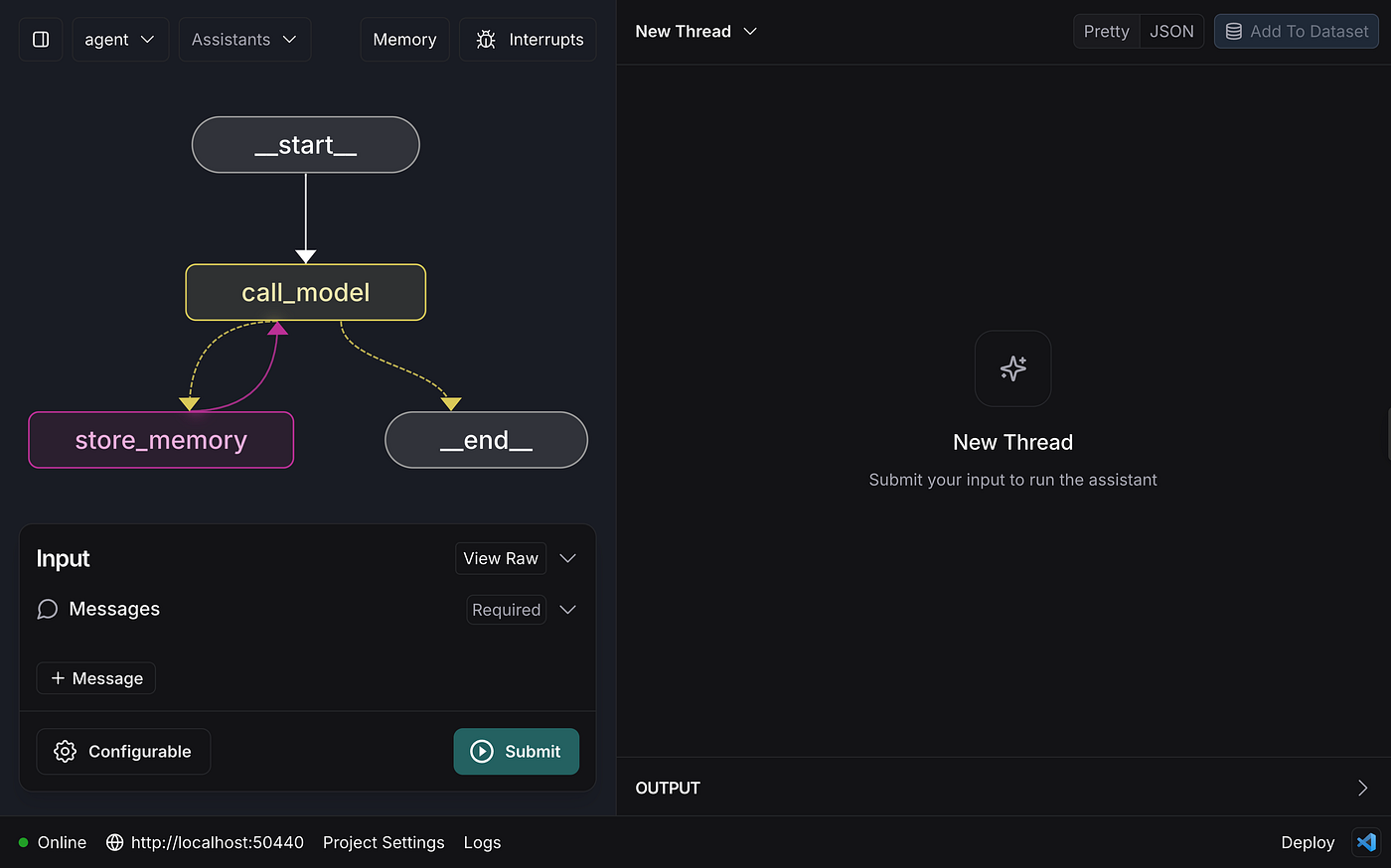
LangChain is an open-source orchestration framework for LLM applications, rebuilt at its 1.0 release around an agent-centric core that runs on the LangGraph runtime. LangGraph models an agent as a graph with explicit state, so a run can loop between reasoning and tool calls, pause for human approval, checkpoint its progress, and resume after a crash, and LangChain's reach across models, vector stores, and tools cuts integration work on multi-part pipelines. Legacy chains now sit in a separate langchain-classic package, and a higher-level Deep Agents layer adds planning and subagents on top of the raw graph.
LlamaIndex is an open-source data framework built retrieval-first, with the job of getting the right context to an LLM over messy real-world data. Its primitives read as a retrieval pipeline, where readers load source data, indexes structure it into nodes, retrievers fetch the relevant nodes, and query engines combine retrieval with answer synthesis, and its LlamaParse parser turns PDFs, tables, and slide decks into clean nodes that naive loaders mangle. It has grown past pure RAG into an event-driven Workflows engine and a LlamaAgents layer for building and deploying document agents, though its center of gravity stays firmly on the data.
RAG and Retrieval
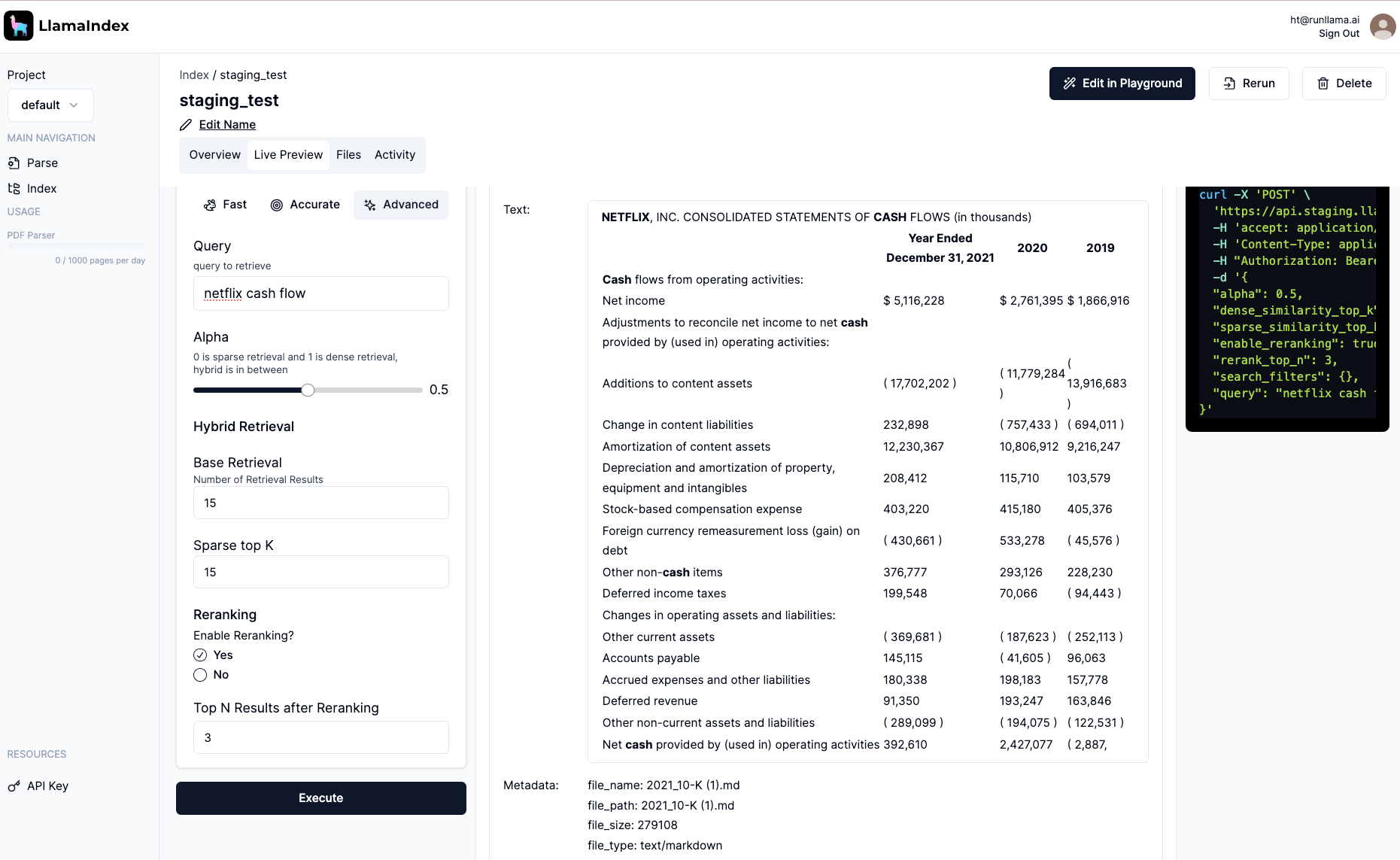
Retrieval is where LlamaIndex pulls ahead, because it treats the retrieval pipeline as the main event rather than one integration among many. It ships hierarchical chunking, auto-merging retrieval that stitches small matched chunks back into their parent context, and query engines that handle routing, sub-questions, and citation without extra wiring, so the shortest path from a corpus to a grounded answer runs through LlamaIndex. LangChain retrieves competently through its retriever interface and its wide set of vector-store integrations, but reaching the same retrieval quality takes more assembly, since you compose the chunking, the fusion, and the synthesis yourself.
The real separator on hard source data is parsing. LlamaParse turns the documents that break naive loaders, dense PDFs, multi-column layouts, and tables that lose their structure, into clean queryable nodes, and it is often the reason teams reach for LlamaIndex even when LangGraph runs the surrounding agent. One tactic worth knowing is to match the parsing tier to the document rather than defaulting to the most powerful one, since LlamaParse bills per page and the modes range from one credit for fast parsing up to forty-five for its heaviest agentic mode. Start on the cost-effective tier and step up only when a document actually needs it, and note that pushing a reasoning model at parsing tends to cost more and read worse than LlamaParse's purpose-built agentic mode.
Agents and Orchestration
Agents flip the advantage to LangChain. A LangGraph agent is a state machine, a graph of nodes that share an explicit state object, which gives you cycles for reason-act loops, conditional branches for routing, and checkpointing that persists every step to Postgres or SQLite so a long run can crash and resume exactly where it stopped. Human-in-the-loop is a first-class primitive, where an interrupt pauses the graph at a risky node such as a database write and waits for approval before continuing, and tool calling, multi-agent supervision, durable execution, and streaming all come built in. LangGraph reached its stable 1.0 after more than a year running agents in production at companies like Uber, LinkedIn, and Klarna, and the newer Deep Agents layer adds planning and subagents for teams that want less low-level control.
LlamaIndex answers with its Workflows engine, an event-driven model where steps emit and consume events with typed state and resource injection, now paired with a LlamaAgents layer that deploys document agents through a llamactl command line, prebuilt templates, MCP servers, and persistent memory. That combination has closed much of the old gap and is clean for the linear and lightly branched pipelines common in document automation. For the deep, stateful, multi-agent control flow where a run branches, loops, and pauses across many steps, LangGraph is still the stronger engine, and it is the better pick when control flow, rather than retrieval, is the hard part of the problem. The one migration cost to plan for is LangGraph's 1.0 restructure, which moved the old prebuilt agents into langchain.agents, so older code needs a small update.
Data Ingestion and Connectors
Both frameworks pull in source data through a connector layer, and the difference is depth against breadth. LlamaHub centers on ingestion for retrieval, with more than two hundred readers tuned to produce clean nodes from files, APIs, and databases, backed by LlamaParse for the documents that defeat simpler loaders. LangChain's document loaders and integrations span a wider surface of tools and services that reaches well beyond ingestion, which matches its broader orchestration scope. For getting messy source documents into a retrieval pipeline cleanly, LlamaHub and LlamaParse give LlamaIndex the edge, while for wiring an agent into a long tail of external tools and APIs, LangChain's integration breadth wins.
Pricing
Both frameworks are MIT open source and free to self-host, so the cost lives entirely in the managed services around them, and the two sides meter completely different things. On the LangChain side, LangSmith handles tracing and evaluation with a free Developer tier and a paid Plus tier at $39 per seat, while LangGraph Platform handles agent hosting with a free Developer tier good for a hundred thousand node executions on your own infrastructure, then a Plus tier that bills roughly a tenth of a cent per node executed plus standby time for a running deployment. On the LlamaIndex side, the managed platform now branded LlamaParse, formerly LlamaCloud, runs on credits at about a dollar per thousand, with a genuinely useful ten thousand free credits a month, and it bills per document page at a rate set by the parsing tier you choose.
LangChain (+ LangGraph) | LlamaIndex | |
Framework license | MIT, free to self-host | MIT, free to self-host |
Managed layer | LangSmith (tracing, eval) and LangGraph Platform (agent hosting) | LlamaParse, formerly LlamaCloud (parsing, extraction, indexing) |
Free managed tier | LangSmith Developer free; LangGraph Developer free to 100K node executions | 10,000 credits per month |
Entry paid | LangSmith Plus $39/seat; LangGraph Plus per-node plus standby | Credit model, about $1 per 1,000 credits |
Main cost driver | Traces, node executions, standby minutes, and seats | Document pages times parsing tier, 1 to 45 credits per page |
Enterprise | Custom, adds SSO and self-hosting | Custom, adds VPC deployment |
The cost shapes point in opposite directions, which is the useful part for budgeting. A document-heavy ingestion pipeline pushes LlamaParse credits up as page volume and parsing complexity climb, while an agent-heavy workload pushes LangSmith traces and LangGraph node and standby fees up as runs get longer and more concurrent. The standby charge is the one that surprises teams, since a production LangGraph deployment kept running around the clock costs well over a hundred dollars a month before a single agent runs, so batch or scale-to-zero patterns matter if traffic is bursty. Self-hosting both cores removes the managed fees entirely, at the cost of running and observing the infrastructure yourself, and both now emit the OpenTelemetry conventions for LLM traces, so you are not locked into either vendor's tracing to do that.
Best For
Pick LlamaIndex if your problem is retrieval-heavy, you are building document Q&A or a RAG pipeline over complex source data, and you want the shortest path from messy documents to grounded, cited answers.
Pick LangChain with LangGraph if you are building multi-step agents that need explicit state, loops, durable checkpointing, and human approval gates, or you want the broadest set of tool and model integrations for orchestration.
Pick both if the app needs strong retrieval and strong agents at once, since a common production shape runs LlamaIndex retrieval and LlamaParse ingestion inside a LangGraph agent, and the two compose cleanly.
Which One to Pick
Decide by which half of the problem is harder, retrieval or orchestration, then confirm against the full table below.
Your situation | Pick this |
Your hardest problem is retrieval quality over documents | LlamaIndex |
You parse messy PDFs, tables, or slide decks | LlamaIndex |
You want the fastest path to a working RAG pipeline | LlamaIndex |
You are building multi-step, stateful agents | LangChain with LangGraph |
You need loops, checkpointing, and human approval gates | LangChain with LangGraph |
You need the broadest tool and model integrations | LangChain with LangGraph |
The app needs strong retrieval and strong agents at once | Both, LlamaIndex retrieval inside a LangGraph agent |
Here is the full picture across every dimension this comparison covered.
LangChain (+ LangGraph) | LlamaIndex | |
License | MIT, open source | MIT, open source |
Center of gravity | Orchestration and agents | Retrieval and document Q&A |
Core abstraction | Agents on a graph state machine | Indexes and query engines |
Agent runtime | LangGraph 1.0, durable, stateful, multi-agent | Workflows engine plus LlamaAgents |
Higher-level agent layer | Deep Agents (planning, subagents) | LlamaAgents templates and llamactl deploy |
RAG and retrieval | Competent via retrievers, more assembly | Query engines, auto-merging, routing built in |
Document parsing | Via loaders and integrations | LlamaParse, strongest on messy documents |
Connectors | Broad tool and service integrations | LlamaHub, 200+ ingestion-tuned readers |
Human-in-the-loop | First-class interrupts | Supported, lighter than LangGraph |
Durable execution | Checkpointing to Postgres or SQLite | Workflow persistence, less deep |
Managed observability | LangSmith, free to Enterprise | Within the LlamaParse platform |
Managed hosting | LangGraph Platform | LlamaAgents via llamactl and LlamaCloud |
Free managed tier | Free tiers on both services | 10,000 credits per month |
Pricing model | Usage-based, runs, standby, and seats | Usage-based, credits per page |
Observability standard | OpenTelemetry GenAI conventions | OpenTelemetry GenAI conventions |
Learning curve | Broader, more concepts, slimmer since 1.0 | Narrower, data-first, quicker for RAG |
Standout feature | Deep, durable agent control flow | Fastest, cleanest retrieval over hard documents |
Main weakness | More assembly for pure retrieval | Shallower for deep multi-agent control |
Best for | Multi-step agents and orchestration | Document-centric RAG pipelines |
For document-centric RAG, LlamaIndex is the default, the shortest path from messy source data to grounded answers, and for multi-step agents and complex orchestration, LangChain with LangGraph is the default, with the state, durability, and human-in-the-loop control that production agents need. The reliable way to settle it is to prototype the harder half of your own problem rather than trust any table, including this one. Parse your ugliest documents through LlamaParse and build your gnarliest agent loop in LangGraph, see which framework removes the most work, and remember the answer is often both, with LlamaIndex handling the data layer inside a LangGraph agent.
FAQ
Which is better for RAG, LangChain or LlamaIndex?
For retrieval quality and document Q&A, LlamaIndex is better, with query engines, hierarchical chunking, auto-merging retrieval, and LlamaParse document parsing built specifically for RAG. LangChain can build RAG too, but it takes more assembly to match LlamaIndex's retrieval depth. Many teams use LlamaIndex for retrieval inside a LangChain or LangGraph app.
Which is better for AI agents, LangChain or LlamaIndex?
LangChain paired with LangGraph is the stronger choice for multi-step agents, since LangGraph models agents as stateful graphs with cycles, durable checkpointing, and first-class human approval gates. LlamaIndex has closed much of the gap with its Workflows engine and LlamaAgents layer, which suit document-centric agentic workflows, but LangGraph is built for deeper, multi-agent control flow.
Can you use LangChain and LlamaIndex together?
Yes, and many production teams do. A common shape uses LlamaIndex for retrieval and LlamaParse for document ingestion inside a LangGraph agent, which pairs LlamaIndex's data layer with LangGraph's orchestration. The two frameworks are complementary rather than mutually exclusive, so the practical answer is often both.
Is LlamaIndex free?
Yes. The open-source LlamaIndex framework is MIT licensed and free to self-host, and you pay only for the LLM calls you make through your own provider. The managed LlamaParse platform, formerly LlamaCloud, is separate and credit-based, with 10,000 free credits a month before any paid spend.
Is LangChain free?
Yes. Both LangChain and LangGraph are MIT licensed and free to self-host with no usage caps. The paid parts are the managed services around them, LangSmith for tracing and evaluation and LangGraph Platform for hosting agents, each with a free tier before paid plans begin.
Is LangChain or LlamaIndex easier to learn?
For building a RAG pipeline, LlamaIndex is usually quicker to pick up because its data-first primitives map directly onto the retrieval problem. LangChain covers more ground and carries more concepts, though its 1.0 release trimmed the surface area and standardized the agent abstraction. For a simple single LLM call, both add overhead that a direct API request avoids.